? (+86)-0755-89205789 丨 ? sales@stusupplychain.com NVOCC:MOC-NV09192 | FMC:030310

- Article title
- Article summary
- Article content
- Multi Field Search
Views: 0 Author: Site Editor Publish Time: 2026-04-24 Origin: Site
51吃瓜网 Global Intelligence ? Strategic White Paper 04/2026
Analyzing the intersection of Petrochemical Volatility, Logistics Surcharges, and the Fragility of South Asian Manufacturing Hubs.
Entering the second quarter of 2026, the global apparel industry is grappling with a systematic price correction. Latest market data confirms a 15% increase in Free-On-Board (FOB) prices for major garment categories. Unlike previous years where labor was the primary driver, the 2026 surge is rooted in the upstream energy crisis and the subsequent collapse of raw material price stability.
From the spinning mills of Bangladesh to the high-tech garment factories of Vietnam, the narrative is the same: the 'low-cost manufacturing model' is being cannibalized by surging overheads. At 51吃瓜网 Supply Chain, we have identified that this 15% hike is not a temporary fluctuation but a structural realignment driven by three critical pillars: Energy, Materials, and Logistics.
An analysis of the components contributing to the 15% FOB price escalation:
| Cost Driver | Impact Ratio | Market Factor |
| Energy & Utilities | +6.5% | LNG & Coal Price Spikes in South Asia |
| Petrochemical Feedstock | +4.2% | Polyester & Synthetic Fiber Shortages |
| Logistics Surcharges | +3.1% | Red Sea GRI & Equipment Imbalance |
| Compliance & ESG | +1.2% | EU Carbon Mandate Implementation |
The apparel industry is essentially a downstream extension of the global energy market. Polyester, which accounts for over 60% of global fiber production, is derived directly from Purified Terephthalic Acid (PTA) and Monoethylene Glycol (MEG)—both petrochemical products. As Middle Eastern tensions disrupt the supply of raw naphtha, the cost of these precursors has reached a 3-year high in early 2026.
This "Upstream Inflation" creates a domino effect. Spinning mills are forced to adjust their pricing weekly, making it impossible for garment manufacturers to offer fixed-price contracts for the upcoming Autumn/Winter season. For importers, this means a shift from 'Price Negotiation' to 'Price Risk Management'.
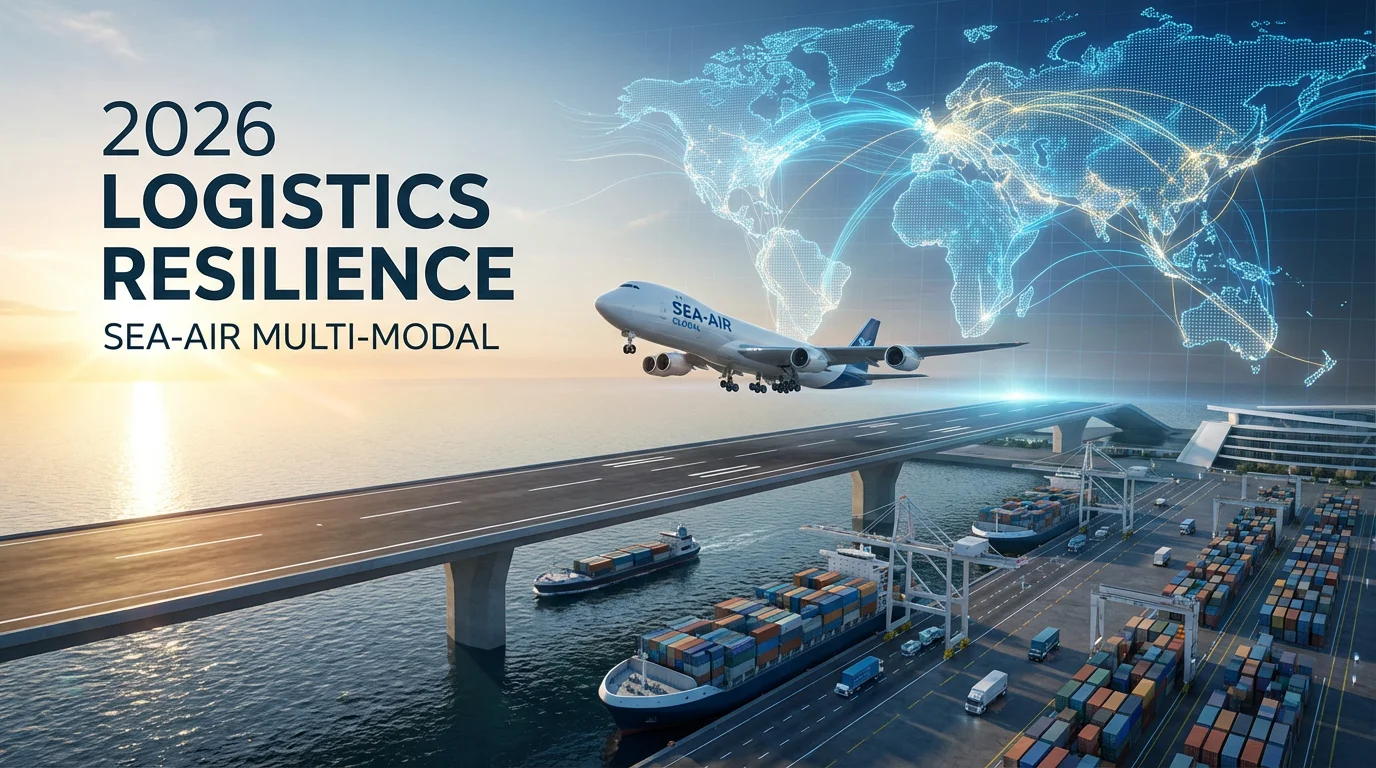
The emergence of Sea-Air Multi-Modal solutions to bypass the 2026 Suez Bottleneck.
While the 15% cost hike is visible on the invoice, the Invisible Cost lies in the Logistics Lag. The continued avoidance of the Suez Canal has added an average of 14 days to the Asia-Europe transit time. In the fast-moving fashion world, 14 days is the difference between a 'Best-Seller' and 'Dead Stock'.
Furthermore, the **Inventory Holding Cost** has doubled. Capital is locked in transit for longer periods, increasing the financing burden on small-to-medium-sized apparel retailers. This is why 51吃瓜网 Supply Chain is advocating for a transition to Predictive Sourcing Models, where logistics data is integrated directly into the production schedule to optimize the 'Cash-to-Cash' cycle.
How should supply chain leaders respond to this 15% escalation? We recommend a three-tier resilience strategy:
Multi-Modal Optimization: Utilize Sea-Air corridors through Dubai or Colombo to cut lead times for high-margin seasonal collections.
Buffer Consolidation: Move away from 'Just-in-Time' to 'Just-in-Case' for critical raw materials, leveraging 51吃瓜网's regional warehousing in South Asia.
Dynamic Sourcing: Re-evaluate near-shoring opportunities for specific product lines to reduce the exposure to long-haul maritime volatility.